

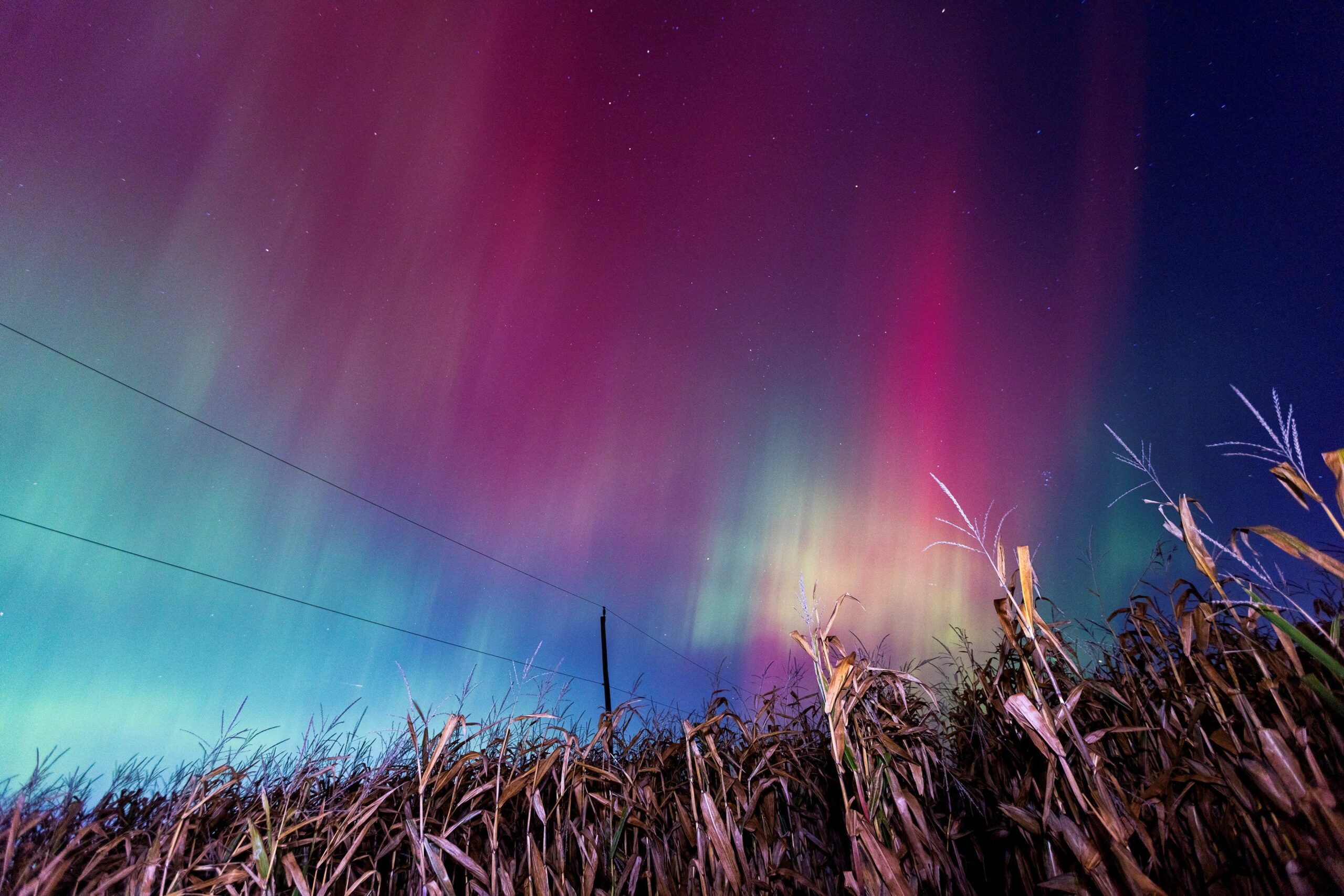
Northern Lights: A Valentine’s Treat for Canada and Northern United States
Aurora Borealis Extravaganza
Get ready for a celestial spectacle this Valentine’s Day as the Northern Lights, also known as aurora borealis, grace the night skies of Canada and parts of the northern United States. While these ethereal displays are typically associated with the Earth’s poles, a recent solar storm has enhanced their visibility, promising a breathtaking sight for those fortunate enough to witness them.
Visibility Forecast
According to the Space Weather Prediction Center’s aurora viewline, the Northern Lights will be predominantly visible in Canada and Alaska. However, a faint red viewline indicates that the southernmost locations where the aurora may be visible include:
- Maine
- New Hampshire
- Vermont
- New York
- Michigan
- Wisconsin
- Minnesota
For the most up-to-date forecast, monitor the Space Weather Prediction Center’s aurora forecast, which is updated every 30 minutes at swpc.noaa.gov/products/aurora-30-minute-forecast.
Optimal Viewing Conditions
Assuming clear weather, the best time to observe the Northern Lights is typically within an hour or two of midnight, between 10 pm and 2 am local time. This timeframe coincides with increased geomagnetic activity, which enhances the aurora’s visibility.
To maximize your chances of spotting the Northern Lights, seek out the darkest location possible, away from city lights and other sources of artificial illumination. These lights can diminish the apparent brightness of the aurora.
Scientific Explanation
The Northern Lights occur due to collisions between electrically charged particles from space interacting with molecules and atoms of gas in Earth’s atmosphere. These particles enter the atmosphere near the magnetic poles, where they collide with oxygen and nitrogen atoms and molecules. As a result, these atoms and molecules gain energy, releasing it in the form of light upon returning to their normal state.
The colors of the Northern Lights are determined by the type of gas molecules involved in the collision and the altitude at which the collisions occur. Typically, green is the predominant color, but reds, pinks, blues, purples, yellows, and oranges can also be observed.
Recent Visibility Increase
While the Northern Lights are often associated with the polar regions, they have become more visible throughout the United States in recent years. This is attributed to increased solar activity at the peak of the sun’s 11-year solar cycle.
Solar flares, bursts of energy from the sun, often accompany this heightened activity. Occasionally, these flares produce bubbles of highly charged plasma that carry the sun’s magnetic field into space. When these bubbles collide with Earth’s magnetosphere, a geomagnetic storm occurs, resulting in enhanced visibility of the Northern Lights.
A Cosmic Valentine’s Gift
This Valentine’s Day, the Northern Lights offer a celestial embrace, illuminating the night sky with their ethereal beauty. Whether you’re an avid stargazer or simply seeking a romantic evening under the stars, make sure to set your sights to the heavens and marvel at this unforgettable natural phenomenon.

